Are We Making a Dent? Looking at Corporate Social Investment in South Africa
By Michelle Adler, forgood Operations Director
South Africa does not lack generosity. Corporate South Africa continues to invest billions into communities, schools, nonprofits and social programmes every year. Trialogue estimates total Corporate Social Investment (CSI) spend at R13.1 billion in 2025, up from R12.7 billion in 2024.
And yet, the social reality remains deeply challenging. Unemployment remains high, particularly among young people. Poverty and food insecurity continue to affect millions of households. South Africa also remains one of the most unequal societies in the world.
So perhaps the question is not whether CSI matters we know that it does - but rather: are we making the kind of impact that the country needs?
CSI plays a critical role in supporting communities and organisations across the country. But when we consider the scale of South Africa’s challenges, it raises an important question:
Can CSI, on its own, meaningfully shift deeply rooted, systemic issues? Or is its greatest value in how it complements - and strengthens - broader efforts across government, business, and society?
Much of CSI funding goes into important and necessary work - food relief, school support, bursaries, early childhood development etc... These efforts do make a real difference in people’s lives.
So how do we address the deeper drivers of exclusion and what might it look like to balance both — meeting urgent needs while also contributing to longer-term change?
Across the country, there are thousands of initiatives doing meaningful work. But when efforts are spread across many projects, short funding cycles and parallel programmes, it can be difficult to build enough scale and continuity to shift outcomes. Perhaps greater collaboration, alignment, or shared learning can strengthen the impact that already exists.
CSI has traditionally focused on reaching as many beneficiaries as possible — which is important but at the same time, there is an opportunity to ask what is changing as a result of these efforts, how might stronger measurement, learning and feedback help programmes evolve and deepen their impact over time?
Sometimes businesses work in silo’s and don’t consider CSI and how it can link to their day to day business operations. It is regarded as a separate department that is only responsible for ‘donations’ but in actual fact if you understand the BBBEE and ESG scorecard properly there are many ways that you can have an impact in your business dealings such as which suppliers you use, who you hire and how you create opportunities. A lot more could be achieved if CSI efforts were more closely aligned with these core business activities.
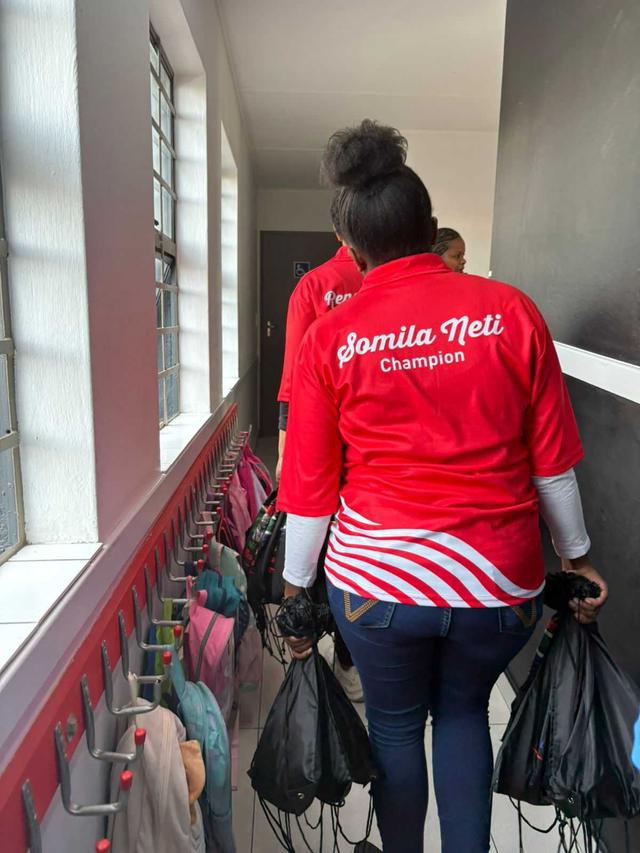
Alongside funding, many companies are also investing time, skills and people through employee volunteering which can contribute in so many ways to meaningful change. In many cases, volunteering is still seen as a once-off activity — a day of giving back. These moments are valuable and often meaningful for both employees and communities but there are also ways to make employee volunteering more intentional, more consistent and more closely aligned with social impact goals.
Skills-based volunteering can strengthen our non-profit sector, mentoring and career guidance can help our desperate youth to make better choices and get exposure to the working world. When thoughtfully designed, employee volunteering can build empathy, shift perspectives, and connect employees more directly to the realities CSI is trying to address.
There are no simple answers — but there are opportunities to reflect on small shifts over time:
· Could funding be more long-term to build sustainability?
· Could more partnerships help address challenges at scale?
· Could we focus more on outcomes, not just activity?
· Could CSI be more closely linked to how businesses create opportunity?
· Could employee volunteering move from once-off activities to more intentional, skills-based engagement?
South Africa does not need less CSI. It needs continued commitment — alongside ongoing reflection on how to strengthen impact.
Perhaps the real opportunity is not to have all the answers, but to keep asking better questions.
Because meaningful change may not come from doing more — but from doing things a little differently, one step at a time.
At forgood, we see this every day — when funding, volunteering and partnerships come together in more intentional ways, small shifts can start to unlock much bigger impact.
1. Measure outcomes, not just activity. 2. Back ecosystems, not just organisations. 3. Fund fewer things, for longer. 4. Collaborate where the problem is too big for branding. 5. Fund the unglamorous essentials. 6. Link CSI to the economic engine of the firm. 7. Be honest about what CSI can and cannot do.
Come and chat to us at forgood about your CSI strategy and lets make those small changes together, one step at a time.