How 860 kg of bottle tops changed lives
CLIENT: Assore
NPO PARTNER: The Sweethearts Foundation
CAMPAIGN: Around the Assore World in 75 Days
DATE: Five months of collecting, culminating in Casual Day
EMPLOYEES INVOLVED: 152
The waste was the donation
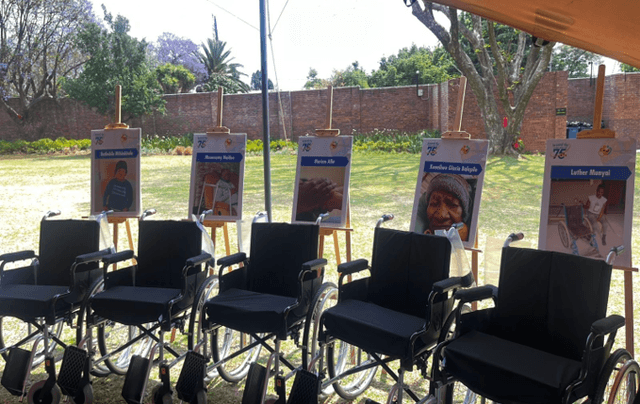
Under a stretch tent in Johannesburg, a row of brand-new wheelchairs stood in the sun. Each one had a name beside it and a handwritten note from an Assore employee tucked inside.
Over five months, Assore employees collected 860 kg of it for The Sweethearts Foundation. That's close to a ton of plastic that would otherwise have ended up in landfill, and it turned into something far more valuable than anyone in that tent had expected when they started saving it.
Two problems, one thread
Millions of plastic bottle tops, coffee cup lids and bread tags go to landfill every year, and they take centuries to break down. At the same time, more than 600,000 South Africans with physical disabilities don't have access to a wheelchair. Without one, independence, dignity and everyday participation in life are out of reach.
One problem is about waste. The other is about human dignity. The Sweethearts Foundation found the thread that connects them, and it runs straight through employees' hands.
- Collect. Employees save bottle tops, bread tags and coffee lids at home, in the office and in their communities.
- Bring in. Items go into collection points at the workplace.
- Sort and deliver. Employees sort everything by colour and deliver it to a recycling partner, who processes it into pellets.
- Transform. Revenue from the recycled plastic funds wheelchairs for people who need them, while the pellets go back into manufacturing in place of new plastic.
It's the circular economy in action; built into a habit people already have.
The campaign everyone rallied around
The collection ran inside Assore's Around the Assore World in 75 Days team competition on the forgood platform. With September marking Casual Day, bottle tops became the activity everyone got behind.
It turned out to be the most popular team activity of the entire programme. 152 employees took part, more than double the next most popular activity.
And it wasn't just a drop-off. Team Ore Express alone brought in over 62 kg, and their team members got their communities involved too. Elsabe Mcintyre from the team mentioned:
“It takes thousands of small items to make one BIG difference, and we are proud that our thousands of small collections will help change someone's life.” - Elsabe Mcintyre, Team Ore Express
The team also worked with people in their community who helped collect and earned a small income in return, which Elsabe called "a reminder that kindness multiplies."
The handover
The campaign ended with a celebration. Assore formally presented 8 brand-new wheelchairs to The Sweethearts Foundation, each one matched to a recipient.
Before the handover, employees sat down and wrote a personal note to their chosen recipient: words of encouragement, kindness and connection that travelled with each chair to its new owner.
That small act changed how people related to the campaign. They stopped being contributors and became emotionally invested partners. Many kept collecting bottle tops long after the event, because they had seen what a jar of plastic could do.
One guest outshone everyone. A learner from one of Assore's supported beneficiary schools had personally collected 36,000 bottle tops. In recognition, the learner was given the honour of choosing the recipient of one of the wheelchairs.
It was a powerful reminder that compassion and initiative can be nurtured young, and that corporate campaigns don't have to stop at the office door. They can spark action across a whole community.
The numbers
The 860 kg also means The Sweethearts Foundation can keep recycling towards even more wheelchairs in future. And the campaign was part of a bigger story: across the 75 Days programme, Assore hit 1,000 connections in five months, against a platform average of 33 months.
Why it worked
- It cost nothing to join. No money was needed, so there was no financial barrier to taking part.
- It used waste. Employees got a feel-good reason to recycle something they'd have thrown away anyway.
- The outcome was visible. People saw the wheelchairs, read the names and met the impact face to face.
- It spread. One learner's 36,000 bottle tops showed how a workplace initiative can ripple into a whole community.
Could this work for your workplace?
Giving back doesn't have to mean a day away from your desk. Sometimes it's a jar on the kitchen counter and a habit of keeping a bottle top out of the bin.
For CSI teams, it's also highly reportable: kilograms diverted from landfill, wheelchairs delivered, and a registered NPO partner in The Sweethearts Foundation. That's measurable environmental and social impact, with a barrier to entry of almost zero.
In an industry often defined by what it takes from the earth, Assore is writing a different story: one about what it puts back.
Want to bring a waste-to-impact campaign to your workplace? Get in touch with the forgood team.