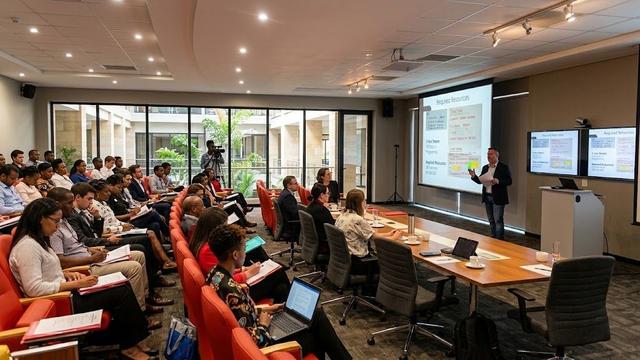
Funding gets the work started. Skills help it last.
by Mashadi Letwaba - forgood Business Development Director
Why structured skills-based volunteering should be built into every funding programme
A grant can be approved in an afternoon. Making sure it lands on a problem the NPO can solve takes longer. Most NPOs are well run. But running a shelter, a reading programme or a sewing project is a different job from building a pricing model, a data system or a monitoring framework, and few small teams have the people to do both.
The companies funding NPOs employ people who do that second job every day. Skills-based volunteering puts those people to work on the NPO’s problem, and it works when it has a clear structure. We have run it several times now, and my view is that it should be built into every funding programme, because it helps the grant do what it was given to do.
What we mean by structured
We have run four programmes like this: the Probono Marathon, NPO Business Challenge, now in its sixth year, and two others for graduate and employee cohorts. Together they have matched volunteers with over 15 NPOs and directed over R1 million in grants. Each one is set up differently, but all follow the same four steps.
First, NPOs are selected before volunteers sign up. Each one is assessed on how well its challenge fits the funder’s strategy and whether volunteers can make a difference to it in the time available.
Second, the work runs as a fixed sprint. Volunteers work with the NPO over several weeks, with feedback along the way, before they pitch their solution to a panel.
Third, the funding follows the work. The grant is awarded against the solution the volunteers proposed, and the NPO commits to spend it that way.
Fourth, someone goes back. We check in with NPOs months later.
What it does for the volunteers
Volunteers rate these programmes highly. People who completed the 2024 feedback form said they would recommend it to a colleague. They also put in serious time. The 20 volunteers who logged their hours recorded 1 623 between them, about 81 each. If the 70+ people who finished put in similar hours, that comes to close to 6 000.
What people said they learnt matters more than the scores. Some of it is practical: presenting through a story, drafting a business plan, budgeting, getting quotes, leading a team of people they had just met and disagreeing with them respectfully. Most of it is about how they now see the sector.
One volunteer wrote that we all hear about socio-economic hardship, but that playing a part in “uplifting” a community is a different experience, and one that shows “how privileged we are”. Another described moving from thinking about daily needs to thinking about “how to sustain themselves long term”. Others spoke of “thinking outside of my normal comfort zone” and “understanding needs in other provinces”. One 2025 volunteer said they had learnt about themselves and “the person I want to become”. The reports from the graduate and employee programmes say the same thing: volunteers started out thinking of NPO support as a donation and finished thinking of it as a long-term partnership built on skills.
The NPOs noticed it too. One told us the volunteers brought “a fresh external perspective” and took the time to understand their context. Others said the volunteers’ questions helped them see their own challenge differently. The relationships often last beyond the programme. In 2025, one volunteer pledged ongoing life-coaching support, along with CV and website help and donated laptops, and another committed to keep working with their NPO into the next year.
What it does for causes over the long term
The grant gets spent. What lasts are the systems the volunteers built, which the NPOs keep. Four examples from recent cohorts:
- A women’s craft enterprise had stalled. Volunteers gave it a pricing and costing model, a stock and inventory system, a business plan and a WhatsApp Business line. Its first two corporate markets brought in R4,350 in sales through a channel it did not have before. The NPO says it has gone from a dormant initiative to an organised, growing enterprise.
- An after-school programme was keeping manual, scattered records. Volunteers designed a central data system for it. The aim is to cut registration from a day a week to under an hour, and to help keep sponsors by showing them impact as it happens. That stays a projection until the system is built.
- A digital skills programme now has a university partner to maintain its computer lab, and a mentorship link with experienced farmers. The volunteers brokered both.
- A sewing training centre won with the most disciplined plan in its cohort: safety first, then equipment, then the pricing and production systems that would let the training pay for itself. It built on what the centre already had.
Some effects are harder to count. In both the graduate and employee programmes, NPOs said they were treated as strategic partners, and that they grew more confident using skills to solve operational problems. They also started relying on each other. At one final event an NPO pledged to work with another, and it has since contacted the rest of its cohort. The volunteers kept coming back to one question: what will this NPO need to thrive in five years?
The reach is wide. The four NPOs in one cohort serve hundreds of thousands of people between them, so when their operations get stronger, families and communities feel it.
Why it belongs in every funding programme
A grant on its own assumes the NPO can turn cash into outcomes by itself. Many can’t yet. Skills-based volunteering sends someone who has built the system before to build it with them. It changes the funder too. Volunteers go back to their jobs understanding the sector better, and the company becomes a better-informed partner for every grant after that.
Volunteers can’t replace the grant. The winning NPOs still needed their grants to put the volunteers’ designs in place. So any funding programme, whether it is a grant round, a CSI portfolio or a fund, should plan the skills that go with the money:
- Find out what the NPO is missing before the grant is made.
- Match volunteers whose skills fit that gap, and be honest with them about the time it takes.
- Run the work to a fixed timeline, with milestones and support.
- Award the funding against the solution the volunteers propose.
- Go back a few months later and see what held.
If you are planning next year’s CSI budget, ask two questions alongside how much to give. Who on your payroll already knows how to build what an NPO can’t build alone? And is your programme set up so that they get to do it?