Help Afesis by by providing building materials for housing informal settlement communities
category
Housing, Shelter & Community Facilities
sub-category
Building materials & tools
How can you help?
Help Afesis by by providing building materials for housing informal settlement communities
Here's a little more info about this opportunity...
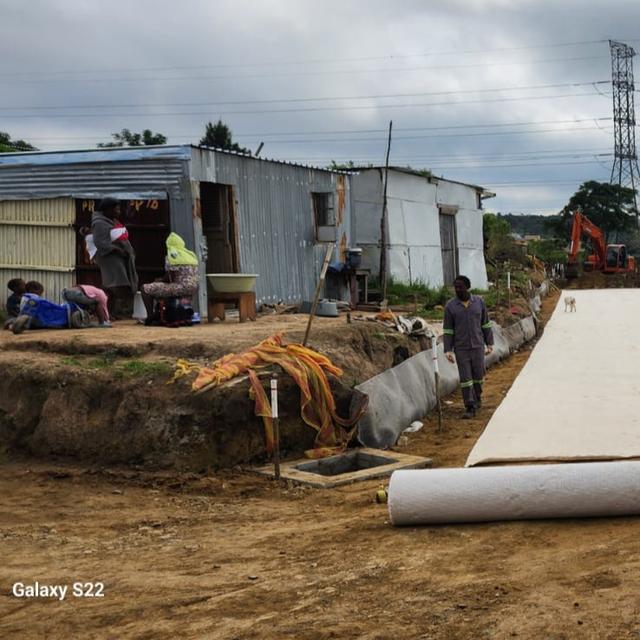
Buffalo City Metropolitan Municipality (BCMM) has over 156 informal settlements, home to approximately 45,000 households. With an average household size of 3.4, this amounts to around 153,000 people which is about 25% of BCMM's total population. These settlements represent roughly 40% of all informal settlement households in the Eastern Cape. In 2021 the BCMM was building about 1,600 new government subsidised houses a year, so at these delivery rates it would take just over 28 years just to house all households living in an informal settlement. This does not take into account those living in backyard shacks and overcrowded households. It also does not take into account the number of new households that will be created as families grow and as new people migrate to the city over this time. Afesis’ reblocking work in informal settlements forms part of a broader incremental upgrading approach, where communities, government, and civil society collaborate to improve living conditions without full relocation. Reblocking specifically involves the spatial reorganisation of shacks—creating structured layouts with access roads, service corridors, and safer spacing to enable basic services such as water, sanitation, and electricity. In essence, Afesis acts as a bridge between communities and the municipality, translating grassroots realities into actionable planning inputs while strengthening democratic participation. While reblocking improves settlement layout and enables service provision, it inevitably requires the physical relocation and reconstruction of structures. This creates a major challenge: • Households must dismantle and rebuild their shacks, often with limited or damaged materials. • Existing materials (zinc sheets, timber, poles) are frequently inadequate, unsafe, or lost during the process. • Without support, reblocking can place an additional financial burden on already vulnerable households, potentially undermining community buy-in. Provision of building materials is therefore not an add-on, it is integral to successful reblocking: 1. Enables safe reconstruction - Materials ensure that rebuilt structures meet basic safety standards, reducing fire risk and structural instability. 2. Protects livelihoods and dignity - Households can transition without losing shelter quality or incurring unaffordable costs. 3. Accelerates project implementation - Material support reduces delays caused by households struggling to rebuild. 4. Strengthens community participation - When residents are supported materially, they are more willing to engage in reblocking processes. 5. Supports long-term upgrading outcomes - Improved structures complement municipal investments in services and infrastructure. For this model to be sustainable and equitable, targeted support for building materials is essential. Without it, the burden of reconstruction falls disproportionately on poor households, weakening both the social and developmental impact of reblocking interventions.
Sustainable Development Goals
Sustainable Cities and Communities
Make cities and human settlements inclusive, safe, resilient and sustainable
Similar opportunities





Helpful tips
Stay safe
- 1. Don’t pass any personal information to people you haven’t met offline before.
- 2. When meeting one of your contacts offline for the first time, always be sure to arrange to meet in a public place.
- 3. Make sure that you are not left alone with someone that you have never met before.
- 4. Know where you’re going. If you’re headed off the beaten track or into an unfamiliar part of town, be sure you have directions and a GPS or map book.
- 5. If you feel unsafe, consult the person in charge and let him or her know.
- 6. Avoid wearing expensive jewellery: it could get damaged, lost or stolen.
- 7. Ask, ask, ask! If you’re worried about something or concerned about your safety in a certain situation, ask the person in charge.