Help The EARTH Centre NPC by donating for support of Riding Therapy for Special Needs Schools
category
Disability, Seniors & Care
sub-category
Special needs education support
How can you help?
Help The EARTH Centre NPC by donating for support of Riding Therapy for Special Needs Schools
Here's a little more info about this opportunity...
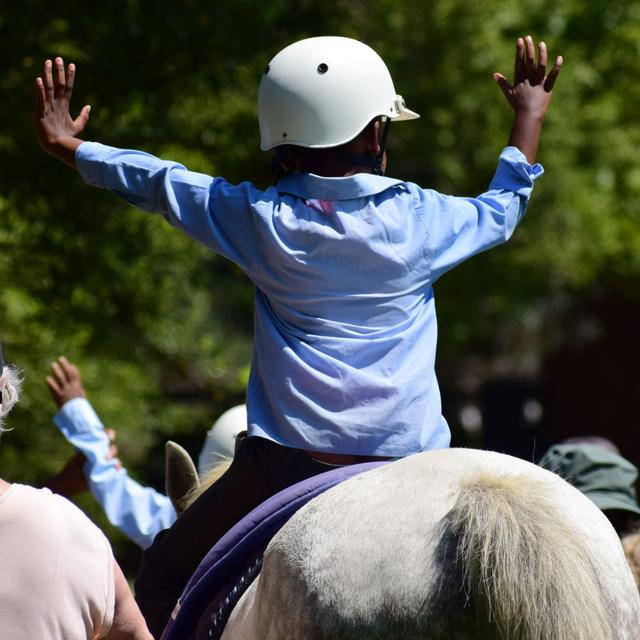
The Problem we address: Disadvantaged Children with Disabilities and Neurodevelopmental Disorders Young children with neurodevelopmental disorders and disabilities, particularly those from disadvantaged communities, are failed by the public health and ECD systems in South Africa, at least until they are old enough for enrolment in a public LSEN school. Our school programme beneficiaries are all young learners from special needs schools in the Johannesburg area; and their journey to this adaptive educational environment was often fraught with delays with assessments and long waiting lists for an opportunity to receive any sort of appropriate intervention. Many come from single parent households, living in backyard rooms, sometimes at risk for abuse, often kept inside for their safety, and frequently the source of deep, culturally derived family stigma and shame. The children may be scarred by trauma and routinely experience high levels of anxiety, distrust and fear; and lack the voice to express it. Many are fearful of any change in routine, and they struggle in their new school environment. They may have behavioural issues that cause disruptions, causing further isolation. Their ability to focus and make human connections may be so fragile that they are unable to benefit when their turn for their scheduled speech or occupational therapy session comes up. They are not ready; they do not show improvements and changes. In many cases, the school is providing their first exposure to any research based or supportive intervention; they are already six to eight years old and mostly unprepared to assimilate and benefit from a learning environment. This is where The EARTH Centre’s LSEN School Programme and our therapeutic riding intervention enters the lives of our beneficiaries. We give these children something more, something different, and we see changes. Therapeutic Riding for LSEN School Learners – Programme Description The school therapists from our LSEN School partners nominate children with assessment and social histories that make them most likely to experience significant improvements from a term-long riding therapy programme. Six to eight children, the school therapist and caretakers travel to The EARTH Centre for group riding therapy lessons once a week during a school term. At The EARTH Centre, the therapeutic riding process involves a SARDA-qualified (South African Riding for the Disabled Association) instructor, rescue horses rehomed and re-educated to be therapy ponies, and trained volunteer lesson assistants -- side walkers to support and engage the children with the lesson activities, and leaders to guide the horse though balanced transitions without interference. While on horseback, the child engages in lesson activities planned to promote skills development across multiple dimensions: horsemanship, sensory integration, focus and attention, fine and gross motor skills, communication and relationships, and confidence and self-esteem.
Sustainable Development Goals
Quality Education
Ensure inclusive and equitable quality education and promote lifelong learning opportunities for all
Good Health and Well-being
Ensure healthy lives and promote well-being for all at all ages
Reduced Inequalities
Reduce inequality within and among countries
Impact Metrics (Estimates)
Learners to be supported
Helpful tips
Stay safe
- 1. Don’t pass any personal information to people you haven’t met offline before.
- 2. When meeting one of your contacts offline for the first time, always be sure to arrange to meet in a public place.
- 3. Make sure that you are not left alone with someone that you have never met before.
- 4. Know where you’re going. If you’re headed off the beaten track or into an unfamiliar part of town, be sure you have directions and a GPS or map book.
- 5. If you feel unsafe, consult the person in charge and let him or her know.
- 6. Avoid wearing expensive jewellery: it could get damaged, lost or stolen.
- 7. Ask, ask, ask! If you’re worried about something or concerned about your safety in a certain situation, ask the person in charge.